The Path of Peace
As a Youth for Human Rights ambassador in Morocco Zakaria el Hamel is encouraging a new generation to
stand Up for peace and human rights in turbulent Arabic world.
LOCATED IN THE NORTHWESTREN corner of Africa, just 10 miles from the shores of
Spain, the Kingdom of Morocco is one of the most diverse and beautiful landspaces in
Africa. From the snowcapped peaks of the Atlas Mountains to the sweeping dunes of the
Sahara, Morocco has it all-including more than a thousand miles of Mediterranean and
Atlantic coastline. It is a country with European and Arab influences, a powerful and
popular monarch, and a strong Islamic base.
In stark contrast to neighboring nations of Algeria, Tunisia and Libya, Morocco has
remaind relatively terror-free ; it’s the last safe haven in North Africa. This fact can be
attributed to it being one of the most tolerant Muslim nations and to its increased security
efforts with Spain, France and the United States to fight global terrorism.
Yet the threat of extremism is ever-present, as evidenceed by the more than 2,000
Moroccans that Interpol claims have been recruited by the
Islamic State group (IS) to-fight in Iraq and Syria and the hundreds more that have joined
IS in Libya.
And this is exactly why 36-years old Zakaria el Hamel is so important for Morocco.For
almost two decades, Zakaria has dedicated himself to creating a culture of tolerence and
understanding by instilling an awareness and appreciation of humman rights.
Born in the city of Berkane in northwestren Morocco, Zakaria was introduced to equality
and religious diversity at a very early age by his father who was a human rights activist. He
studied law in university, and in 2005 he founded ‘‘Youth for Peace and Dialogue Between
Cultures’’ in Oujda, where he now lives. His goal is to foster understanding and respect
among the population by bringing young people from different religions and backgrounds
toghether to serve their communities.
While the country had many virtues, Zakaria knew it also had its share of problems. ‘‘it is
true that we live in a land of peace and harmony,’’ he says. ‘‘But
Zakaria reached further for even more Help : Working alongside religious leaders
From the Catholic, Islamic, Christian and Methodist faiths.
a lot of youth are jobless and there are many human rights abuses. We have a lot of
discrimination in Morocco. For example, if you don’t dress well and you go to the court or
to the hospital, they don’t take care of you and will throw you out because you don’t have
money.’’
As the President of youth for Peace and Dialogue, Zakaria began to meet and collaborate
with active human rights groups. He traveled and spoke at international conventions such
as the Anna Lindh Forum in Barcelona – a major civil society gathering of representatives
from Mediterranean countries to promote intercultural action.
In late 2009, Zakaria saw a notice that caught his eye : a Youth for Human Rights
International Summit at the United Nations base in Geneva. He checked out the Youth for
Human Rights International (YHRI) website where he viewed the 30 public service
announcements.
‘‘the first video ‘ We are all born free and equal’ was just magic when I watched it the
first time. That’s what touched my heart,’’ says Zakaria. ‘‘I was really interested in human
rights education and Youth for Human Rights had what we needed. We had looked for this
in the past but didn’t find it.’’
The Geneva Summit
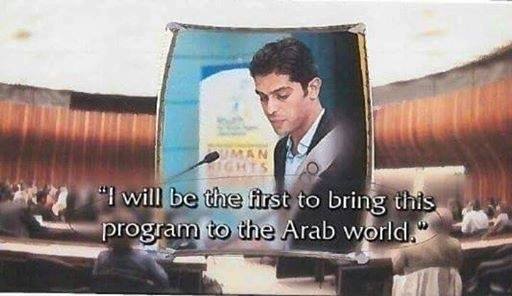
Zakaria contacted YHRI to introduce himself and his foundation. In August 2010, he
traveled to Geneva and took part in the YHRI Summit at the United Nations as the Youth
Delegate from Morocco.
There, he met Youth Delegates from across the world and watched them present results of
their activities from the previous year. Zakaria quickly
realised that he and his people needed the YHRI materials and curriculum – not just to
promote awareness of human rights in Morocco, but to set an example for all Arab
nations.
‘‘I really admire how YHRI gathers youth from different cutures and faiths for peace and
tolerance,’’ says Zakaria. ‘‘YHRI is like a family to me.’’
Zakaria forged new friendships at the summit and returned to Morocco with boxes of
YHRI booklets and materials. He had new inspiration to help safeguard the country from
the rising threat of fanaticism in nearby lands by promoting every human right – including
freedom of religion and expression.
He presented the YHRI materials to the leaders of groups that he knew in Oujda and
other cities. He also incorporated the curriculum in his lectures and workshops to kids in
elementary schools and youth centers in Oujda. Wherever he spoke, he handed out a copy
of The Story of Human Rights and 30 public service announcements so they could show
these to the young people in the area.
Zakaria staged a march in Oujda in 2010 to mark the United Nations annual
International Human Rights Day on December 10. The event was held as part of YHRI’s
first ‘‘International Walk for Human Rights,’’an idea that was born at the Geneva Summit.
The Moroccan march was so popular that Zakaria repeated it in subsequent years.
Zakaria reached futher for even more help : Working alongside religious leaders from
the Catholic, Islamic, Christian and Methodist faiths, Zakaria next staged an interfaith
event in the Saint Louis Church in Oujda. This celebrated ‘‘World
Interfaith Harmony Week’’- a United Nations initiative to increase peace, tolerance and
mutual understanding between different faiths.
To forward the event’s theme and purpose, ‘‘Stopping Violence in the Name of
Religion,’’ Zakaria introduced participants to the Youth for Human Rights campaign and
played the YHRI public service announcement and The Story of Human
Rights documentary.
Sowing the Seeds of Tolerence
Zakaria and memberes of his team moved on to other parts of Morocco. In Casablanca on
the westren seaboard, he and his team presented the campaign to community and city
leaders. They deliveredd a human rights workshop to 200 youth at a summer camp for
Children Pioneer Organisation of Morocco. These kids, from towns and cities all over the
country, eagerly watched all 30 public service announcement videos and then talked about
how these rights could be violated. Two of the videos prompted an excited response : ‘‘We
are all born free and equal’’ and ‘‘A fair and free world.’’ In fact, when the kids took part
in a short human rights walk after the workshop, they spontaneously chanted, ‘‘ We want a
fair and free world.’’
Zakaria presented the Youth for Human Rights materials to leaders of schools and groups throughout
Morocco, including a presentation to the leaders of the group Youth for Peace.
Next stop : the ‘‘Red City’’ of Marrakesh (named for the hue of the brick in the ancient
city walls). Here, the Youth for Human Rights team distributed booklets to vendors and
peddlers in the main square and along the maze of open-air markets, called ‘‘souks.’’ The
souks of Marrakesh are the largest in Morocco and are famous for their endless array of
wares, including leather, jewelry, pottery and fabric.
Wherever they passed out booklets, Zakaria and his team were met with genuine interest.
One Marrakesh street seller told him, ‘‘When I go home tonight, I’m going to read this to
my children so that they can learn their human rights.’’
Even snake charmers and camel handlers who were busy attracting tourits stopped their
activities to read the What Are Human Rights ? booklet from cover to cover.
As they journeyed through Morocco, Zakaria and the Youth for Peace and Dialogue
Foundation introduced the Youth for Human Rights materials and curriculum to many
more like-minded
organisations. One was Mominoun (Believers Without Borders Foundation, a group that
works to forward human dignity and happiness by nurturing respect for freedom of
expression, thought and belief. In addition to requesting the full curriculum for their
headquarters in Morocco’s capital city of Rabat, the members also asked for the materials
for their branches in Jordan, Algeria, Egypt and Lebanon.
Zakaria’s message continues to resonate throughout Morocco : The Morocco
Organisation for Human Rights are collaborating with Zakaria to use Youth for Human
Rights in their workshops and in their lectures to public schools.
From the Moroccan Observatory of Education and the National Council on Human
Rights to the United Religions Initiative, more than twenty organisations and groups
formed alliances with Youth for Human Rights. Together, they now work with Zakaria and
his Youth for Peace and Dialogue Foundation to talk about Human rights all over
Morocco, maintaining the long tradition of peace and tolerance in this North African
Kingdom.