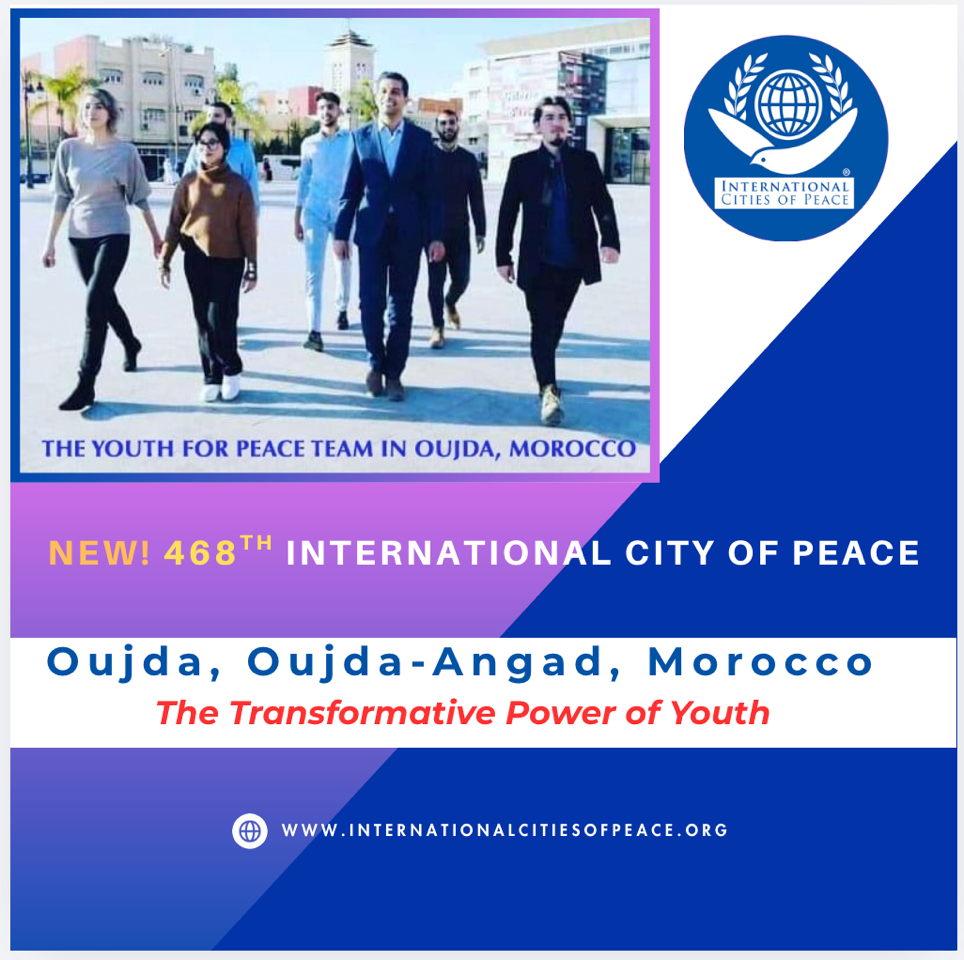
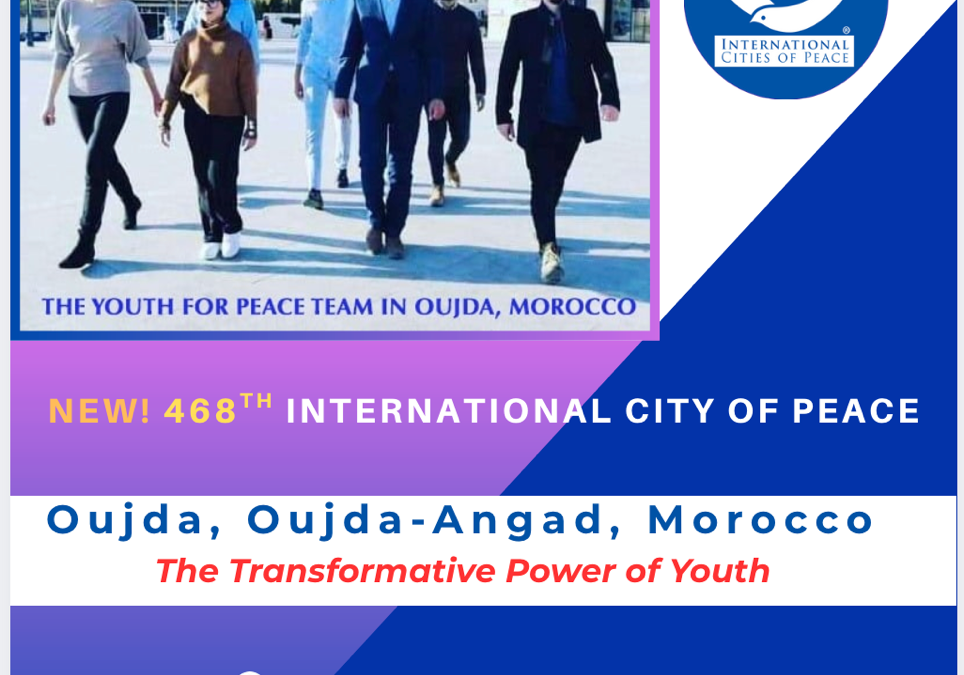
Oujda, Morocco – In an era where geopolitical crises and social tensions dominate the headlines, a quiet Moroccan city is capturing the world’s attention. Oujda, located on Morocco’s eastern border, has just been recognized as the 468th International City of Peace by International Cities of Peace, a global network of communities committed to peace, social justice, and intercultural dialogue.
What sets Oujda apart is not only its historic heritage or its role as a cultural crossroads between Africa and Europe, but the bold initiative of its youth. Under the leadership of activists like Zakaria El Hamel, the city’s young leaders are reinventing the notion of diplomacy and peace—not through international conferences, but within their own community, in schools, neighborhoods, and local forums.
“Peace is not built only in international institutions; it is also born in cities, schools, and communities. From Oujda, we send the world a simple yet powerful message: when young people believe in dialogue, human dignity, and the universal values of human rights, even a border city can become a beacon of peace for humanity.”
Zakaria El Hamel
A Youth That Inspires the World
The local initiative highlights the central role of young people in building a peaceful society. Through educational programs, intercultural dialogue projects, and concrete civic actions, Oujda demonstrates how local engagement can resonate on the international stage.
“We understood that to build a more peaceful world, we must start with our communities,” explains El Hamel. “Young people are not only the future; they are the present of peace.”
Recognition That Opens Doors
Oujda’s integration into the International Cities of Peace network offers the city unique opportunities for international cooperation, educational exchanges, and cultural partnerships. This recognition positions Oujda as a model for cities worldwide, proving that peace can emerge from citizen will and local commitment.
Voices for Humanity: Oujda on the World Map of Human Rights.
The city’s global visibility was further amplified when Voices for Humanity filmed an episode in Oujda, dedicated to the story of Zakaria El Hamel, recognized as Morocco’s most outstanding peace and human rights activist. Broadcast to 240 countries and territories, the episode placed Oujda firmly on the world map of human rights, transforming the city into a symbol of peace and resilience.
This international spotlight not only honored El Hamel’s lifelong dedication to youth empowerment and intercultural dialogue, but also showcased Oujda as a living example of how local activism can inspire global change.
Toward a Moroccan Citizen Diplomacy
In a regional context often marked by mistrust and tensions, the work of Zakaria El Hamel and Oujda’s youth becomes an inspiring example of citizen diplomacy—where education, intercultural dialogue, and local initiatives are transformed into global tools for peace.
Today, Oujda is no longer just a Moroccan border city: it is an international symbol, proof that social transformation, driven by youth, can illuminate the entire world.